-
×
 Waco Water Dispenser W2-170P
1 × ₨78,000
Waco Water Dispenser W2-170P
1 × ₨78,000
Subtotal: ₨78,000

Showing all 2 results
Showing all 2 results
Ceiling cassette ACs sit neatly in a false ceiling, keeping walls clear for shelving, signage, and glass partitions — perfect for offices, showrooms, clinics, and classrooms in Pakistan. Because the panel is centralized, airflow reaches people more evenly, which helps reduce hot spots around workstations or waiting areas. For spaces with heavy footfall, the discreet panel also keeps the environment tidy and professional. If you’re upgrading from multiple wall units, a cassette can simplify the look while maintaining comfort across the room.
In Karachi, Lahore, and Islamabad, many commercial interiors have low to medium-height ceilings and lighting grids. A cassette AC integrates into these grids with minimal visual disruption. Combined with the right tonnage, you get consistent comfort without large indoor units on walls or floors — a plus for clinics and retail counters where hygiene and visibility matter.
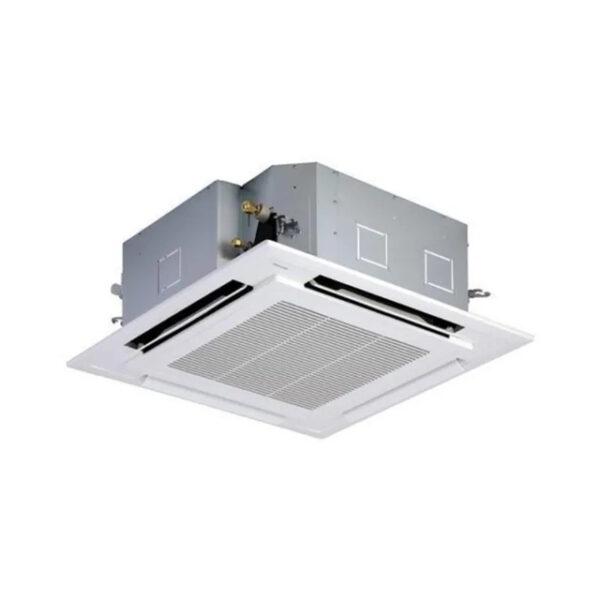
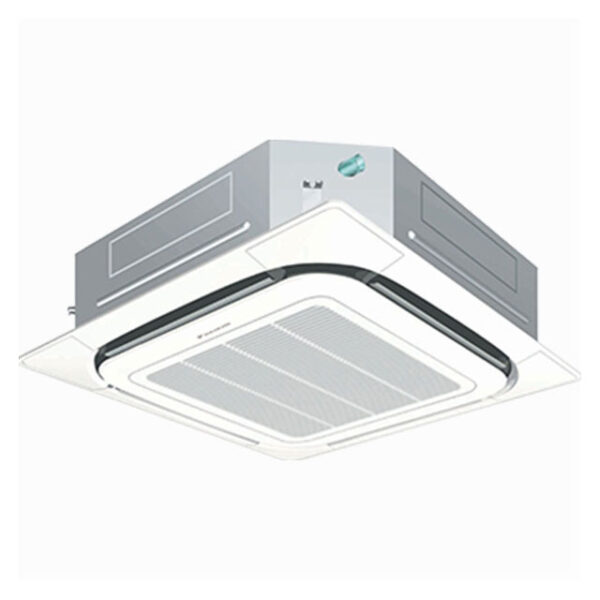
“4-way” refers to the louver layout that throws conditioned air in four directions from the center of the room. This helps create uniform temperatures across open plans or multi-desk layouts. Compared to a wall mount that pushes air in mostly one direction, a 4-way cassette can better cover corners and aisles, especially in rectangular floor plans. It’s also useful where you can’t spare wall space for indoor units.
In high-traffic stores or classrooms, 4-way diffusion helps avoid strong drafts on one side and warm pockets on the other. The result is a more even, comfortable feel — useful for front desks, cashier areas, and consultation rooms where people sit under the airflow for longer periods.
Daikin cassette options include inverter and non-inverter, heat & cool and cool-only variants, and different panel footprints. Refrigerant and specific features can vary by model series (e.g., R410A or other depending on the SKU). For exact specs like panel size, piping, and controls, please confirm on the product page or by calling our team before purchase.
If you’re planning multi-room or staged expansion, ask us about compatibility with Daikin multi/VRV indoor cassette units. We’ll help match the indoor panel to the correct outdoor system and controller lineup.
As a simple rule-of-thumb, 1.5 ton suits small cabins/meeting rooms, 2 ton suits mid-size offices or retail sections, and 4 ton suits larger halls or open-plan areas. Actual needs vary with ceiling height, glazing, west-facing sun, number of occupants, and heat from lights/equipment. When in doubt, share your room dimensions and usage; we’ll guide you to a sensible short-list.
For example, a 12–14 ft deep manager’s cabin with moderate sun may fit a 1.5 ton option, while a 20–24 ft showroom bay with spotlights and footfall often benefits from 2 ton. Large training rooms or open-plan sales floors commonly consider 4 ton cassettes to keep conditions even across rows of desks.
Cool-only suits most of Karachi and coastal areas where winters are mild. Heat & cool (reverse-cycle) is helpful for Islamabad, Quetta, or offices operating late nights when temperatures dip. If your building already has a separate heating solution, cool-only may be sufficient and more budget-friendly.
If you’re unsure, consider operating hours and comfort policies. A heat & cool unit offers flexibility for year-round usage, while cool-only can be ideal for cost-focused cooling in warm climates.
Offices and BPO floors value low noise and even distribution; showrooms want clean ceilings and uninterrupted wall displays; clinics prefer hygienic layouts with easy filter access; eateries need air spread without blasting diners. Daikin cassette panels are designed to blend into false ceilings, making them a strong fit for each of these environments.
Share a quick sketch of your ceiling grid and furniture layout, and we’ll help place the indoor unit for best coverage. Planning early avoids clashes with lights, sprinklers, and CCTV — and keeps the project on schedule.
Daikin 4-way cassette AC panels discharge air on all four sides, helping stabilize temperatures across open-plan layouts and long aisles. This layout reduces the “cold under the unit, warm in the corners” effect that wall units often create. For reception counters, cashier lines, or multi-desk pods, the result feels more even and comfortable. If you’re planning a grid of units, the overlapping throws can be designed to minimize dead spots.
Because the panel sits flush in the false ceiling, a Daikin ceiling cassette air conditioner preserves wall space for shelving, branding, and windows. The central placement also helps keep airflow unobstructed by tall furniture. In spaces with changing layouts, 4-way panels remain versatile without needing to shift wall-mounted units. It’s a clean, professional look for offices, clinics, and retail showrooms.
Daikin cassette inverter AC models modulate output to better match the load, which can improve comfort by reducing temperature swings. In Pakistan’s mixed-use interiors, this steadier performance is appreciated during partial occupancy or evening hours. Energy outcomes vary by site factors such as insulation, setpoint discipline, and operating hours, so use inverter primarily for comfort and potential savings rather than a fixed percentage promise. For cool-only vs heat & cool, pick based on your winter usage and building needs.
If you’re refreshing an older setup, pairing an inverter outdoor with compatible indoor cassettes may reduce compressor cycling and noise. Always confirm refrigerant and controller compatibility by model series before purchase, especially where legacy R410A Daikin cassette AC systems are being replaced. Our team can help you shortlist units that fit your electrical and mounting constraints. Bring room sizes and any existing equipment details for a faster match.
Quiet operation matters in clinics, classrooms, and meeting rooms where voices must carry clearly. Daikin cassette panels are designed to keep the ceiling line tidy while allowing routine filter access from below. In dusty environments, set a realistic cleaning schedule to maintain airflow and efficiency. Early filter care often pays back through better comfort and fewer service calls.
Plan for a maintenance path: a lift ladder, a clear tile to drop, and enough space for safe access. Discuss coil cleaning intervals with your installer based on your footfall and hours. For kitchens or salons, consider pre-filters or more frequent checks. Good upkeep keeps air paths clear and helps your unit perform closer to its design intent.
For multi-room offices, clinics with cabins, or phased expansions, Daikin VRV/VRF cassette indoor units give zoning flexibility and centralized control. They allow you to condition only the areas in use, which is practical for buildings with variable schedules. Future expansion becomes simpler when the backbone is sized with diversity in mind. If you plan to grow, designing around VRV/VRF early can save rework later.
Multi systems also help where facade restrictions limit outdoor placements. With the right selection, you can serve multiple cassettes from fewer outdoor units. Ensure design checks for pipe lengths, elevation, and controller options to avoid surprises. Share your floor plan and operating hours to size intelligently.
Before final selection, align on heat load calculations, ceiling heights, and diffuser interference with lighting and sprinklers. Mark drainage routes and confirm a gravity fall or condensate pump as needed. Electrical teams should account for startup currents, protection devices, and any generator/ATS considerations common in Pakistan. A short coordination meeting often prevents ceiling clashes and delays.
Ask for a reflected ceiling plan (RCP) that shows cassette positions, access tiles, and service clearances. Agree on who supplies brackets, drain pumps, and controls. Document control logic for common zones like reception vs. back office to avoid confusion at handover. Clear drawings make commissioning smoother.
Always verify indoor–outdoor compatibility, refrigerant, panel size, and controller type by SKU before ordering. For tenders, match the submittals to the specified series and list any approved equivalents clearly. Confirm warranty conditions, service coverage, and lead times, especially ahead of summer. If your site has UPS or strict THD limits, share specs so we can align electrical choices.
For cassette AC installation services in Pakistan, we coordinate delivery, mounting, piping, and first startup with clear scope notes. Provide site access timings and any mall or tower permits in advance. Where noise or dust is sensitive, plan off-hours work and protection covers. Good planning keeps the fit-out clean and on schedule.
Use these ranges as a starting point, then adjust for your site: a 1.5 ton cassette commonly suits small cabins or compact treatment rooms (roughly ~150–220 sq ft), 2 ton suits mid-sized offices or showroom bays (~220–320 sq ft), and 4 ton suits larger halls, training rooms, or open-plan retail (~600–750 sq ft). These are broad guidelines; ceiling height, west-facing glass, and people count can push the selection up or down. If the space is partly open to corridors or has frequent door swings, consider the next capacity up for stability. Always balance “bigger” with proper placement and airflow to avoid short cycling.
Example: a 12 ft × 14 ft manager’s cabin with moderate sun and standard ceiling often fits 1.5 ton, while a 20 ft × 24 ft retail zone with track lights and steady footfall often fits 2 ton. Open training rooms with long occupancy and projector heat commonly look at 4 ton for even distribution. Share a quick sketch and usage hours; we’ll give you a shortlist matched to your layout and budget.
Before you lock capacity, walk the site with this quick checklist to reduce surprises and rework. This keeps the selection realistic and installation smoother, especially in busy Karachi and Lahore fit-outs where timelines are tight.
If two or more risk factors stack (e.g., high ceiling + glass + high occupancy), step up capacity or add another unit for better balance. When in doubt, ask us for a quick review with your room dimensions, photos, and operating hours.
Call for a survey when your plan involves open concepts, long rectangular rooms, or premium zones like clinics and boardrooms where comfort is critical. A survey helps fine-tune capacity, place the panel correctly, and coordinate with lighting and sprinklers. It also flags needs like condensate pumps or enhanced filtration before the ceiling closes.
Projects with strict noise limits, display heat, or phased expansion benefit most from a design pass. We can coordinate with your contractor to align unit positions, power points, and controls for a clean handover and easier maintenance.
Cassette panels sit flush within the false ceiling grid; each model has a specific cut-out and a required service clearance. Keep at least one adjacent tile designated as a service access point so filters and coils can be reached safely. Avoid crowding the panel with lights, sprinklers, or CCTV—leave the air paths clear so 4-way throw isn’t blocked.
Before ordering, confirm the panel footprint and body height (plenum depth). In tight voids, check beam locations and ducts early to prevent clashes. A simple reflected ceiling plan (RCP) that marks the unit, access tile, and surrounding fixtures saves time during fit-out.
Plan the condensate drain with continuous fall to a safe discharge point. Where gravity fall isn’t possible, budget for a suitable condensate pump and confirm noise considerations for quiet rooms. Keep the drain route serviceable—avoid burying long stretches behind built-ins without inspection access.
Mark a clear ladder path and keep the access tile unobstructed after handover. This ensures filters can be cleaned from below without moving furniture, reducing downtime for clinics and retail counters.
Provide a dedicated, properly rated circuit with correct MCB/RCBO and earthing. For areas with voltage swings, add a voltage protection device (VPD) or stabilizer as advised by your electrician. If you run on generator/ATS, share specs so starting currents and protections are sized correctly.
Place isolators within reach and label circuits clearly for safety. Good electrical discipline—clean terminations, correct cable gauges, and surge protection—helps protect inverter electronics and minimizes nuisance trips during peak summer loads.
Daikin cassette AC prices in Pakistan vary by tonnage (1.5/2/4 ton), inverter vs non-inverter, heat & cool vs cool-only, and panel size/finish. Market factors such as import cycles, currency, and seasonal demand can also influence final quotes. For accuracy, we recommend a quick call with your room dimensions and usage so we can match the right short-list and provide a current price.
If you’re comparing options, decide first between heat & cool and cool-only, then narrow by tonnage. This keeps quotes apples-to-apples and speeds up approvals. Where timelines are tight, ask for ready-stock models to avoid delays before peak summer.
Call 0321 2222391 for a live quote and availability. You can also visit our store at Hashoo Centre, Shop 61, Abdullah Haroon Road Saddar, Karachi for assistance. Share photos or a sketch of your ceiling grid for faster sizing and placement advice.
For nationwide buyers, we can discuss delivery options and lead times on a case-by-case basis. Corporate and bulk inquiries receive priority handling and consolidated invoicing upon request.
For offices, clinics, and retail chains, we support BOQs, basic layout guidance, and model verification against tender specs. If you are planning VRV/VRF with cassette indoor units, we can coordinate shortlists aligned to pipe lengths, controls, and future expansion needs.
Bring your floor plan, RCP, and basic load notes to accelerate selection and approvals. We’ll help you arrive at a fit-for-purpose, maintainable solution.
As a quick guide: 1.5 ton for compact cabins (~150–220 sq ft), 2 ton for mid-sized rooms (~220–320 sq ft), and 4 ton for larger halls (~600–750 sq ft). Adjust for ceiling height, glass, and occupancy. Share your dimensions for a tailored suggestion.
Prices change with inventory and features (inverter, heat & cool, panel type). Call 0321 2222391 for today’s quote and ready stock. We’ll help you compare like-for-like models to avoid over- or under-specification.
Cool-only suits coastal and mild-winter use, while heat & cool is useful in cooler regions or late-night operations. If your site already has heating, cool-only may be more budget-friendly.
Yes. A 4-way cassette has a visible panel that throws air in four directions; a ceiling-concealed (ducted) unit is hidden and supplies air via grills/ducts. Choose cassettes for simpler installs and open plans; choose concealed when you need ducts or custom diffusers.
Refrigerant varies by model series (e.g., R410A or other). Check the product page or confirm with our team before ordering, especially when matching indoor units to existing outdoor systems.
Yes, Daikin offers cassette indoor units compatible with multi and VRV/VRF systems. Confirm indoor–outdoor compatibility, controls, pipe lengths, and elevation before purchase.