
Slush Machines
Commercial Slush Machines in Pakistan Yasir Electronics currently lists commercial slush machines in single-, double- and triple-bowl configurations for frozen-beverage service in juice shops, cafés, restaurants, kiosks, cinemas,...
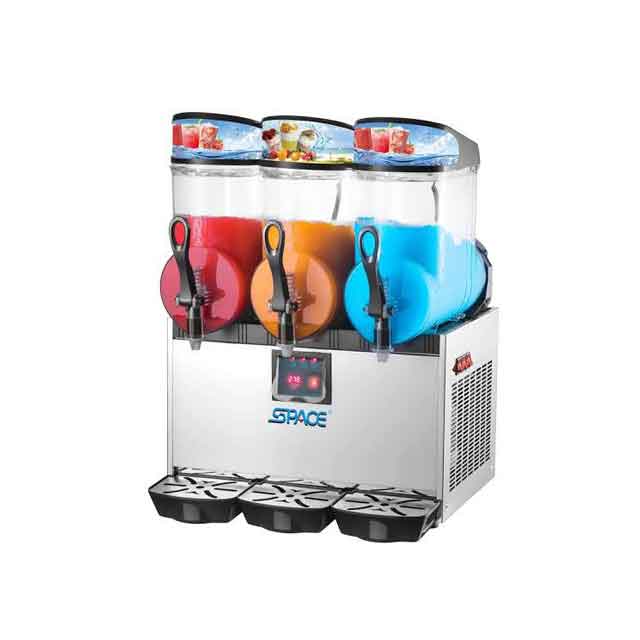 ₨350,000Model : SC 3Rated Power: 900WRated Voltage: 220V-240V In 50HzMain Compressor Refrigerant: R404a 450gAmbient Temperature Requirement: T3x12L
 ₨270,000Specifications of Slush Machine X-300 Double JarModel: X-300Power(W): 890Voltage/Frequency: 220V/50Hz,220V/60HZ ,110V/60HZFeature(bowl): 2JuiceTank: 25LControlpanel: CPUCoolingmethod: AirCooling...
 ₨310,000Specifications of Slush Machine X-450 3 JarModel: X-450Power(W): 1100Voltage/Frequency: 220V/50Hz,220V/60HZ ,110V/60HZFeature(bowl): 3JuiceTank: 37.5LControlpanel: CPUCoolingmethod: AirCooling...
 ₨180,000Specifications of Slush Machine X-150 Single JarModel: X-150Power(W): 550Voltage/Frequency: 220V/50Hz,220V/60HZ ,110V/60HZFeature(bowl): 1JuiceTank: 12.SLControlpanel: CPUCoolingmethod: AirCooling...
Commercial Slush Machines in Pakistan
Yasir Electronics currently lists commercial slush machines in single-, double- and triple-bowl configurations for frozen-beverage service in juice shops, cafés, restaurants, kiosks, cinemas, food courts, dessert counters and other foodservice businesses. The live range includes the X-150, X-300, X-450 and SPACE SC-3.
Choosing a machine involves more than counting bowls. Commercial buyers should compare verified bowl capacity, menu variety, counter space, rated power, exact electrical configuration, ventilation, product-mix compatibility, cleaning requirements and recovery during busy service. A slush machine normally creates a semi-frozen drink by refrigerating and continuously moving a suitable liquid mixture; it is not simply an ice crusher or blender. Current commercial information is available in the live product listings.
Current Slush Machines at Yasir Electronics
| Model | Bowls | Verified Capacity | Rated Power | Verified Operating Detail | Dimensions | Consider When |
|---|---|---|---|---|---|---|
| X-150 | 1 | Verify exact bowl capacity | 550 W | CPU control; air cooling | 240 × 530 × 600 mm | You want one frozen-drink flavour and a narrower counter footprint |
| X-300 | 2 | 25 L listed total tank capacity | 890 W | CPU control; air cooling | 430 × 530 × 600 mm | You want two simultaneous products or flavours |
| X-450 | 3 | 37.5 L listed total tank capacity | 1100 W | CPU control; air cooling | 620 × 530 × 800 mm | You need broader menu variety and have more counter space |
| SPACE SC-3 | 3 | 12 L × 3 | 900 W | Independent control for each tank | 545 × 475 × 700 mm | You want three separately controlled tanks with manufacturer-verified capacity |
The X-300 and X-450 figures are listed as total tank capacities. Do not divide them into assumed per-bowl capacities without exact manufacturer confirmation.
How Does a Commercial Slush Machine Work?
A commercial slush or granita machine partially freezes a suitable liquid beverage mixture while an auger or mixing mechanism keeps the product moving. Refrigeration removes heat, controlled ice crystals form, and the moving mixture develops a semi-frozen consistency that can be dispensed through a tap.
This differs from crushing ice. A typical refrigerated granita machine does not normally need crushed ice added to create slush; exact machine and mix instructions take priority.
What Does the Auger Do?
The auger keeps product moving, distributes cooling and supports ice-crystal development. It does not perform the batch-blending job of commercial blender blades.
Slush Machine vs Ice Crusher vs Ice Maker
| Equipment | Main Job | Starting Material |
|---|---|---|
| Slush machine | Partially freezes, agitates, holds and dispenses a suitable beverage mix | Prepared liquid beverage |
| Ice crusher | Mechanically crushes or shaves existing ice | Solid ice |
| Ice maker | Produces ice | Water |
If your workflow starts with solid ice rather than a liquid frozen-beverage mix, compare ice crushers. Businesses that need a separate supply of ice can explore commercial ice makers.
Slush Machine vs Juice Dispenser and Commercial Blender
A juice dispenser typically chills and dispenses liquid, while a slush machine refrigerates and agitates a compatible mix towards a frozen consistency. A commercial blender processes ingredients in batches with blades; a slush machine refrigerates, holds and dispenses product. For liquid-only service, browse commercial juice dispensers; for batch preparation, view commercial blenders.
Single vs Double vs Triple Bowl Slush Machines
| Configuration | Menu Advantage | Space Consideration | May Suit |
|---|---|---|---|
| Single bowl | One core flavour or product | Typically the narrowest format in a comparable series | Kiosks or businesses with a focused frozen-drink menu |
| Double bowl | Two flavours or beverage bases at once | Requires more counter width and cleaning time | Cafés and juice shops wanting more choice |
| Triple bowl | Three simultaneous products | Greater footprint and more food-contact parts | Busy counters where menu variety matters |
More bowls primarily increase flavour and holding flexibility. They do not automatically prove faster freezing, greater recovery or more drinks served per hour.
Bowl Capacity Is Not Hourly Output
Bowl or tank capacity tells you how much product a reservoir is designed to hold. Hourly output describes how much product the machine can freeze, recover and serve over time. These are different specifications.
Throughput depends on refrigeration capacity, mix temperature, ambient conditions, formulation, refill frequency and demand. Do not convert bowl litres directly into cups per hour without tested output data.
What Is Brix and Why Does It Matter?
Brix commonly describes dissolved sugar concentration in a liquid. Sugar and other ingredients change freezing behaviour and can affect whether product becomes too hard, too soft or reaches the intended slush texture.
There is no universal Brix target for every machine. Follow the exact manual and beverage-base instructions; guidance for another manufacturer’s machine should not automatically be applied to the X-series or SC-3.
Why Can a Slush Mix Stay Too Liquid or Freeze Too Hard?
Sugar, other dissolved solids and ingredients such as alcohol can change freezing behaviour. Settings, product temperature, ambient conditions and refrigeration performance also matter. Check the approved mix and machine instructions before altering the formula.
Can Sugar-Free Drinks Be Used?
Do not assume a zero-sugar drink can replace a standard frozen-beverage base directly. Sugar-free products can freeze differently and may require a purpose-designed base or formulation. Use a product specifically suitable for commercial frozen-beverage equipment and compatible with the exact machine.
Can Natural Juice Go Straight Into a Slush Machine?
Natural juices vary in sugar, pulp, acidity, solids and viscosity. Check machine and beverage guidance rather than assuming every juice can be poured directly into the bowl.
Freeze-Down Time and Recovery During Service
There is no universal freeze-down time. It depends on the machine, formulation, starting mix temperature, bowl fill, ambient conditions and consistency setting. Recovery describes how quickly serving consistency returns after dispensing or refilling; a large bowl can still fall behind during heavy demand.
Plan for Peak-Service Workflow
During busy service, consider dispensing rate, refill frequency, refill temperature, active bowls and condenser airflow. Double- or triple-bowl machines add menu flexibility, but service capacity still depends on recovery performance.
Independent Bowl Control
The SPACE SC-3 manufacturer specifies independent tank control. Yasir also describes individual cylinder control on X-300 and X-450, though the X-series manufacturer remains unverified. Separate control can help manage products individually, but it should not be turned into an automatic energy-saving claim.
Frozen Slush vs Chilled-Drink Operation
Some granita machines support both semi-frozen and chilled-liquid operation. Yasir describes the X-series as serving slush and cold drinks. Confirm exact operating modes before purchase if chilled-liquid service matters.
Ventilation Is a Core Buying Requirement
Air-cooled refrigeration equipment needs unobstructed condenser airflow. Check manufacturer clearances, nearby walls, ventilation and access for condenser cleaning. Avoid strong heat sources such as fryers, ovens or grills where they would raise surrounding temperature or block airflow.
Karachi Ambient Conditions and Recovery
Warm Karachi commercial spaces can increase refrigeration load, especially with warm refill mix or nearby cooking equipment. Verify the exact ambient requirement, provide adequate venue ventilation and allow the machine to reject heat properly.
Check Counter Space and Electrical Configuration
Measure width, depth and height, then allow space for lid opening, bowl removal, dispensing, cleaning and ventilation. Consider counter strength and delivery access.
The X-series listings show several voltage/frequency combinations. Treat these as possible factory configurations, not proof of a switchable unit. Confirm the exact Pakistan configuration. Rated wattage is also not continuous daily energy use; cycling, ambient conditions and demand affect consumption.
Compressor Brand Is Not the Machine Brand
Yasir lists Gree as the compressor brand for X-150, X-300 and X-450. That identifies a component in the listing, not the complete machine manufacturer. Because the X-series maker could not be verified confidently, describe these units by model code rather than assigning an unsupported brand.
Which Bowl Configuration Fits Your Business?
Juice Shop or Kiosk
A single bowl can suit one signature frozen drink where counter width is limited. A second bowl becomes useful when customers expect flavour choice or when two different beverage bases need to remain available simultaneously.
Café, Bakery or Dessert Shop
Double- or triple-bowl machines can broaden the frozen-drink menu, but check whether demand justifies the extra footprint, cleaning work and product held in the additional bowls.
Restaurant, Cinema or Food Court
Peak demand and refill recovery may matter as much as flavour count. Consider how often product will be drawn during rush periods and whether the venue can provide adequate condenser airflow.
Events and Catering
Check transport practicality, counter support, electrical compatibility and cleaning arrangements. Do not assume a heavy commercial machine is suited to every temporary venue simply because it can serve multiple flavours.
Recipe Compatibility Is Part of Machine Selection
Treat the machine and beverage base as a compatible system. Verify dilution instructions, mix requirements, pulp/solids limits and frozen-service suitability. Do not borrow a syrup ratio from another brand. Dairy or alcoholic products require additional technical and food-safety controls and should only be used where supported.
Cleaning and Sanitation
Bowls, taps, seals, augers and drip trays are food-contact parts and need cleaning and sanitising according to the exact procedure. Frequency depends on product, machine design and food-safety requirements. Do not treat an “automatic cleaning” claim as a substitute for sanitation unless the manual says so. Use approved food-contact products as labelled and never mix chemicals.