
LG Dehumidifiers
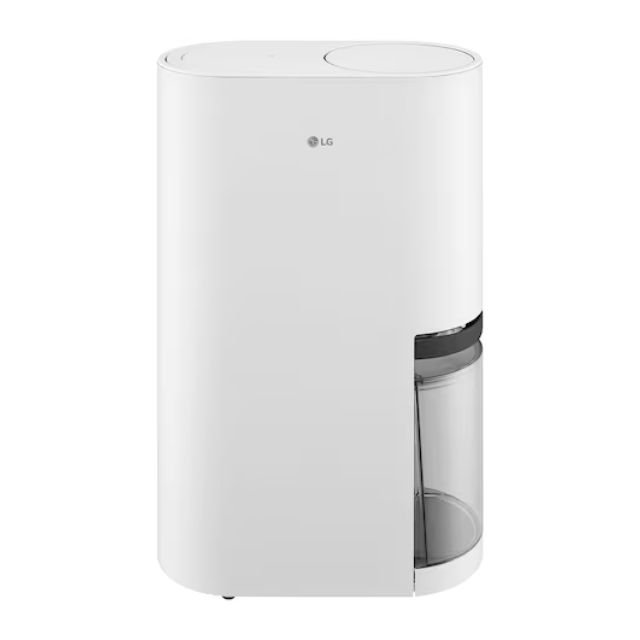 ₨230,000Brand: LGModel: DD23GMWE1Type: DehumidifierCapacity: 23 L/dayMaximum Capacity: Up to 40 L/day*Compressor: Dual Inverter Compressor™Water Tank: 5 LitersSmart Control: LG ThinQ™ / Wi-Fi...
LG Dehumidifiers in Pakistan
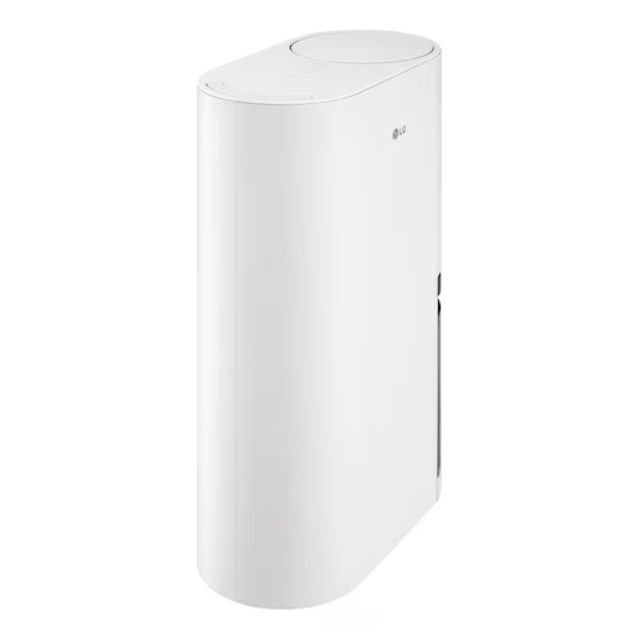
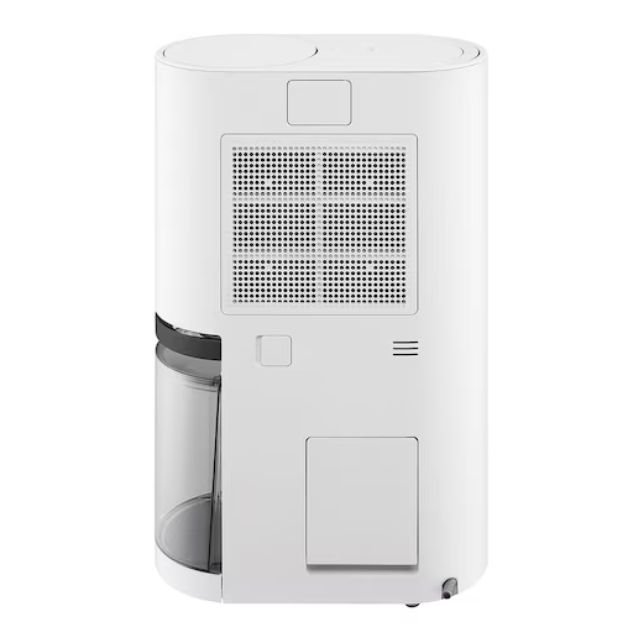
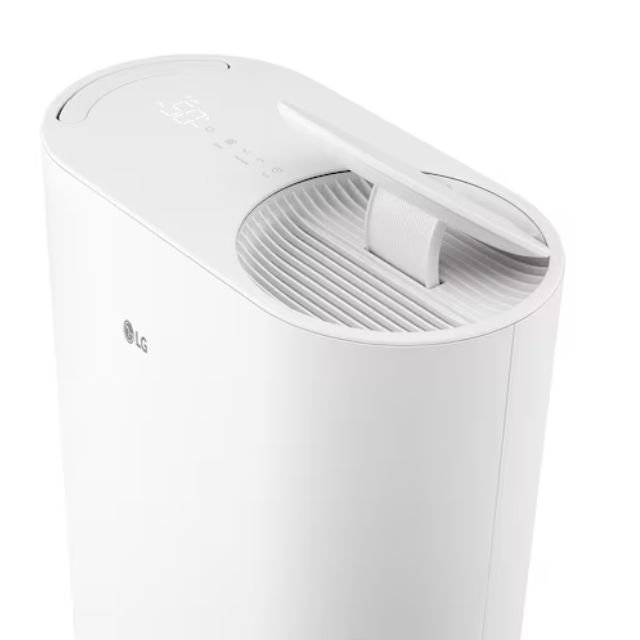
LG dehumidifiers remove excess water vapour from indoor air and help manage humidity in homes, bedrooms, laundry areas, storage rooms and offices. At Yasir Electronics, the current LG Dehumidifiers subcategory is represented by the LG PuriCare DD23GMWE1, a Dual Inverter Compressor model with LG ThinQ Wi-Fi control, UVnano, automatic humidity control and continuous-drainage support.
For buyers in Pakistan, especially in humid coastal conditions such as Karachi, the important comparison is not simply the largest litres-per-day number. Test conditions, tank size, drainage, operating noise, smart functions and the actual moisture source all matter. Use the listing below for current availability.
LG Dehumidifier Available at Yasir Electronics
| Specification | LG PuriCare DD23GMWE1 |
|---|---|
| Dehumidification rating | 23 L/day; LG also publishes 40 L/day at 30°C / 80% RH |
| Compressor | Dual Inverter / twin rotary compressor |
| Water tank | 5.0 litres |
| Smart control | LG ThinQ with Wi-Fi |
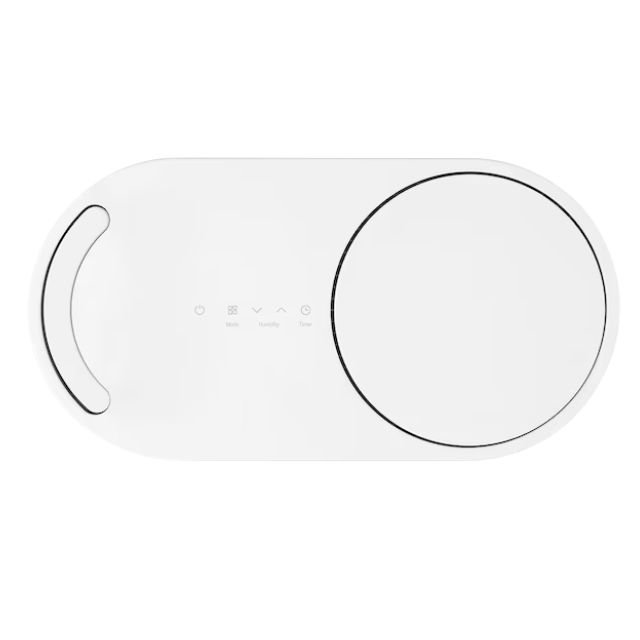
| Humidity functions | Humidity control, humidity display, temperature and humidity sensor |
| Air-treatment feature | UVnano; no ionizer listed by LG |
| Drainage | Internal tank or continuous drainage |
| Noise | 40 / 34 dB for high / low operation |
| Dimensions | 410 × 640 × 210 mm |
| Net weight | 16.0 kg |
For the exact unit details, view the LG PuriCare DD23GMWE1 product listing.
What Does Litres per Day Mean on a Dehumidifier?
A dehumidifier's litres-per-day rating measures how much moisture it can remove from air over a specified period under particular temperature and relative-humidity test conditions. It is not the water-tank size, room coverage or a guarantee that the same amount will be collected every day in your home.
Warmer and more humid air contains more removable moisture, so the same machine can show a higher extraction figure under hotter, wetter test conditions. Real-world collection changes with room temperature, starting humidity, ventilation, moisture sources and how long the unit runs.
Why LG Dehumidifier Capacity Figures Can Differ
Capacity figures should only be compared when the test conditions are comparable. LG lists the DD23GMWE1 at 23 L/day and separately publishes 40 L/day at 30°C and 80% relative humidity. The visible LG specification does not state the test condition beside the 23 L/day figure, so that number should not be assigned an assumed condition.
For the LG MD19GQGE0, LG explicitly lists 19 L/day at 26.7°C / 60% RH and 31 L/day at 30°C / 80% RH. The higher figure does not mean the machine suddenly becomes a different model; the test environment contains more moisture. When comparing the two models under the same 30°C / 80% RH condition, LG lists 40 L/day for DD23GMWE1 and 31 L/day for MD19GQGE0.
Dehumidification Capacity vs Water-Tank Capacity
Daily dehumidification capacity and tank capacity describe different things. Daily capacity measures moisture removal under specified conditions. Tank capacity describes how much condensed water the internal container can hold before it needs emptying.
The DD23GMWE1 has a 5.0-litre tank, but that does not limit the machine to 5 litres of moisture removal per day. In humid conditions the tank may require repeated emptying unless continuous drainage is used.
How to Choose the Right LG Dehumidifier
Choose around the actual moisture problem rather than one headline number. Consider space size and openness, starting humidity, temperature, laundry or other moisture sources, operating noise and drainage. One portable unit may not control several closed rooms equally well. Avoid converting litres per day into an invented square-foot rule when LG does not publish verified room coverage for the exact model.
LG DD23GMWE1 Features Explained
Dual Inverter Compressor
LG specifies a Dual Inverter/twin rotary compressor for DD23GMWE1. Inverter compressor control allows the appliance to vary operation rather than relying only on simple fixed-speed cycling. Avoid turning that technology into an assumed electricity-bill saving because actual consumption depends on humidity load, target setting, room conditions and operating time.
LG ThinQ and Wi-Fi
DD23GMWE1 supports LG ThinQ over Wi-Fi. LG lists moisture measurement, scheduling and Smart Diagnosis among its smart functions. App use requires a compatible phone, supported ThinQ environment and suitable network connection, and available functions can vary by market or account configuration.
UVnano and Humidity Control
LG lists UVnano on DD23GMWE1 together with automatic dehumidifying, humidity control and a temperature-and-humidity sensor. LG does not list an ionizer for this exact model, so UVnano should not be described as an ionizer feature.
Continuous Drainage and Quiet Operation
The model supports continuous drainage as well as tank collection. It also includes a named quiet operating mode, with LG listing 40 / 34 dB for high / low operation. “Quiet mode” should not be interpreted as completely silent operation.
Another LG Dehumidifier Elsewhere on Yasir: MD19GQGE0
Yasir also lists the LG MD19GQGE0 in its broader Dehumidifiers category and LG catalogue, although it is not currently assigned to the LG Dehumidifiers subcategory.
LG specifies a Dual Inverter Compressor, 5.3-litre tank, ThinQ Wi-Fi, UVnano and an ionizer for MD19GQGE0. Its operating modes include Laundry Dry, Jet Dry, Smart Dry and Silent Dry. LG lists 19 L/day at 26.7°C / 60% RH and 31 L/day at 30°C / 80% RH.
DD23GMWE1 vs MD19GQGE0
| Factor | DD23GMWE1 | MD19GQGE0 |
|---|---|---|
| Yasir placement | Current LG Dehumidifiers subcategory | Broader Dehumidifiers category / LG catalogue |
| 30°C / 80% RH rating | 40 L/day | 31 L/day |
| Other published capacity | 23 L/day; visible LG page does not state the condition beside this figure | 19 L/day at 26.7°C / 60% RH |
| Tank | 5.0 L | 5.3 L |
| ThinQ / Wi-Fi | Yes | Yes |
| UVnano | Yes | Yes |
| Ionizer | No | Yes |
| Drying modes | Spot and quiet modes are listed by LG | Laundry, Jet, Smart and Silent Dry are listed by LG |
Consider DD23GMWE1 when its higher like-for-like 30°C / 80% RH extraction rating and current LG-category placement fit your needs. MD19GQGE0 may make more sense when its ionizer and dedicated laundry/dry modes are relevant. Neither should be chosen solely from the largest number in a product title.
Is an LG Dehumidifier Useful in Karachi?
Karachi's coastal climate can experience periods of high outdoor humidity, so a dehumidifier can be useful in specific indoor spaces where humidity remains persistently high. Examples include closed apartments, bedrooms with limited airflow, wardrobes, indoor laundry areas, storage rooms and offices.
A dehumidifier cannot repair plumbing leaks, rainwater ingress, rising damp or water-damaged materials. If dampness is caused by an active water source, that problem should be corrected directly. Humidity control is most useful after or alongside proper moisture-source management.
Dehumidifier vs Air Conditioner Dry Mode
Air-conditioner dry mode may remove some moisture while the AC operates, depending on its design and room conditions. A dedicated dehumidifier is specifically designed to manage humidity and collect or drain condensed water, including at times when additional room cooling is not the main goal.
Neither option is universally superior. AC dry mode can be useful when cooling and moisture removal are needed together, while a portable dehumidifier gives more dedicated humidity-control flexibility. Do not assume one always uses less electricity than the other.
LG Dehumidifier vs Air Purifier
| Function | Dehumidifier | Air Purifier |
|---|---|---|
| Primary purpose | Remove excess water vapour | Reduce selected airborne particles or pollutants through model-specific treatment |
| Humidity control | Yes | Normally no |
| Water tank | Common on portable models | Not normally required for air purification |
| Particle filtration | Not the primary function | Core function where the purifier uses appropriate filters |
UVnano on an LG dehumidifier does not make the machine equivalent to a dedicated particle-filtering air purifier. Buyers focused on dust, smoke or filtration can separately review LG air purifiers.
Dehumidifier vs Exhaust Fan
An exhaust fan exchanges indoor air with incoming air, while a dehumidifier removes moisture from recirculating indoor air. Ventilation may lower humidity when outside air is drier, but humid outdoor air can add moisture. Required fresh-air ventilation should not be blocked simply to improve dehumidification.
Tank Operation vs Continuous Drainage
With tank operation, condensed water collects inside the appliance and the container must be emptied when full. Continuous drainage routes collected water through a suitable hose when the exact model and installation support it.
Continuous drainage does not automatically mean the appliance has a drain pump. Gravity drainage and pumped drainage are different systems. Follow LG's instructions for hose routing and drain placement rather than assuming water can be pumped uphill.
Can an LG Dehumidifier Help Dry Indoor Laundry?
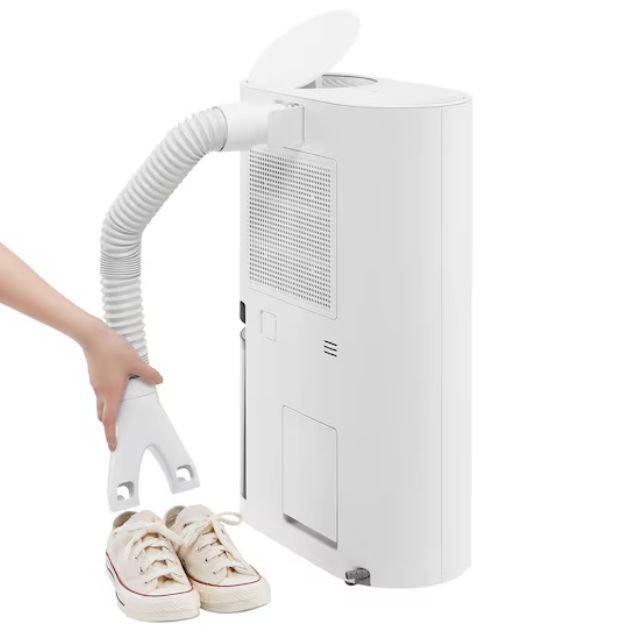
Reducing surrounding humidity can help moisture leave drying clothes more effectively. MD19GQGE0 includes a dedicated Laundry Dry mode, while DD23GMWE1 provides dehumidification and spot-drying functions that can be useful around moisture-producing areas.
A dehumidifier is not the same as a tumble dryer and no fixed laundry-drying time should be assumed. Fabric load, room temperature, airflow, starting humidity and spacing between garments all affect drying.
UVnano vs Ionizer
UVnano and an ionizer are separate technologies. DD23GMWE1 lists UVnano but no ionizer. MD19GQGE0 lists both UVnano and an ionizer.
These features should be described using LG's exact model terminology and should not be turned into medical claims. The primary purpose of both products remains dehumidification.
Condensation, Musty Rooms and Mould Risk
Reducing excessive indoor humidity can make conditions less favourable for condensation and moisture-related mould growth. However, condensation also depends on cold surface temperatures, insulation, thermal bridging and ventilation.
A dehumidifier does not automatically remove established mould or repair the source of water. If mould is already present, the moisture source should be identified and appropriate cleaning or remediation may be necessary.
What Indoor Humidity Level Should You Aim For?
EPA and ENERGY STAR guidance commonly describes indoor relative humidity around 30% to 50% as a useful general range, with keeping humidity below 60% important for reducing conditions favourable to mould growth. This is general building guidance rather than one medically ideal setting for every person or climate.
Use the dehumidifier's humidity display as a practical indicator, while considering comfort, building conditions and any instructions supplied with the appliance.
Where a Domestic LG Dehumidifier May Not Be Enough
A portable household LG PuriCare dehumidifier may not be appropriate for industrial warehouses, swimming pools, flooded buildings, major construction drying or processes that require tightly controlled industrial humidity. Those applications can require higher-capacity or purpose-built equipment.
For broader domestic and commercial options, browse all dehumidifiers at Yasir Electronics.
Best Use Cases Around the Home or Office
For a bedroom, prioritise operating noise, target humidity and tank handling. In a living room, consider the openness of the space and moisture entering from adjoining areas. Laundry areas create a higher moisture load, so drainage and drying modes can matter. For wardrobes or storage rooms, investigate leaks or wall dampness as well as airborne humidity. In offices, operating noise, drainage, mobility and smart scheduling may influence the choice.