-
×
 Sharp Microwave Oven R-219J 22 LTR
1 × ₨35,000
Sharp Microwave Oven R-219J 22 LTR
1 × ₨35,000 -
×
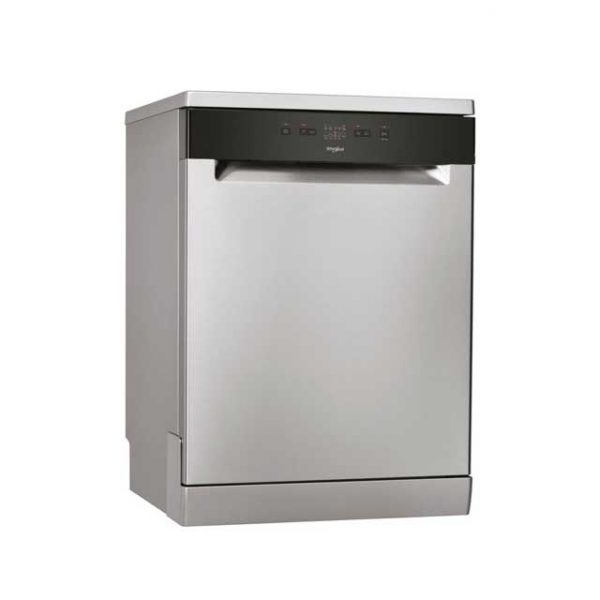 Whirlpool Dishwasher WFE 2B19 X UK
1 × ₨275,000
Whirlpool Dishwasher WFE 2B19 X UK
1 × ₨275,000
Subtotal: ₨310,000
 Sharp Microwave Oven R-219J 22 LTR
1 × ₨35,000Whirlpool Dishwasher WFE 2B19 X UK
1 × ₨275,000
Sharp Microwave Oven R-219J 22 LTR
1 × ₨35,000Whirlpool Dishwasher WFE 2B19 X UK
1 × ₨275,000Subtotal: ₨310,000
Showing all 3 results

Showing all 3 results
Choosing a Hitachi bottom load water dispenser means less lifting, tidier bottles, and reliable hot–cold performance for Pakistani homes and offices. This category page is designed to help you pick the right model for Karachi apartments, Lahore clinics, or Islamabad reception areas, without guesswork or jargon. You’ll find model-by-model pointers, what to compare before you buy, and practical guidance on delivery, setup, and care. If anything is unclear—features, warranty, or stock—call Yasir Electronics at 0321-2222391 (Saddar, Karachi) and we’ll confirm details the same day. Price and availability can vary with exchange rates and import cycles, so always check the latest on the product card or via phone before you finalize.
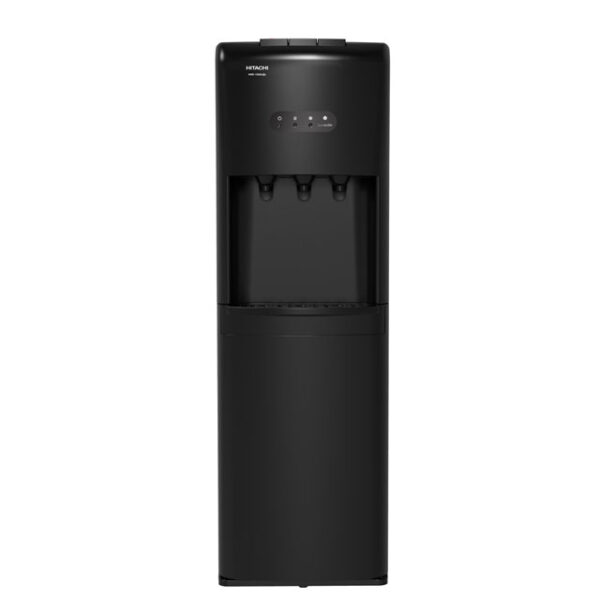
The HWD-B30000 is a strong fit if you want a bottom-loading design with hot, cold, and normal water on tap and minimal bottle handling. For family homes in Karachi or shared flats in Lahore, the bottom compartment keeps the heavy bottle low, so you don’t have to lift it above shoulder height. Many shoppers prioritize child safety lock on hot water for peace of mind around kids—make sure your specific unit includes this feature. Expect a compact, vertical footprint that parks neatly beside a fridge or in a lounge corner, reducing clutter from visible bottles and pipes.
For small offices or clinics, this model’s everyday performance suits tea rounds and quick hydration breaks. Bottom loaders often include indicators to signal an empty bottle or active heating/cooling; the exact indicator set can vary by batch, so check the product card or ask our team before ordering. If your building’s voltage fluctuates in the summer, we recommend using a quality surge protector and positioning the dispenser with a few centimeters of clearance for ventilation. For users comparing brands, Hitachi bottom load water dispenser hot and cold delivery is designed for daily use—ideal for chai and cold glasses after work.
Best for: Homes with children (prioritize hot-water child lock), small clinics, and compact offices wanting a clean look and simpler bottle changes.
Tip: If you’re switching from a top loader, schedule your first bottle change when someone else is around; the under-shelf sliding motion is easy, but a helper keeps the first swap stress-free.
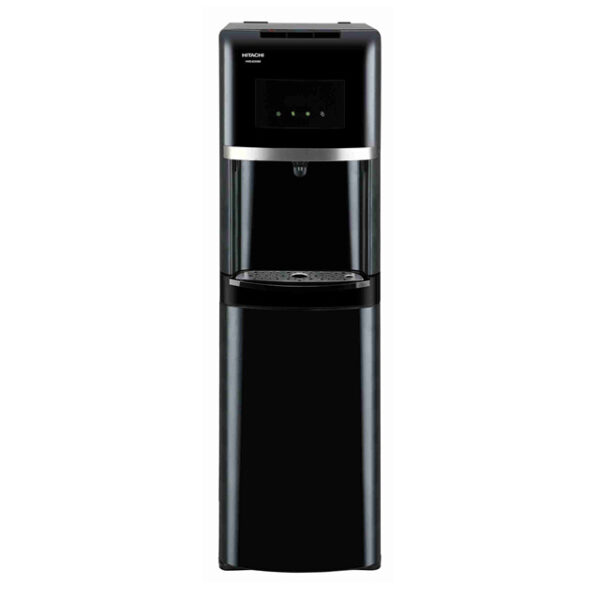
Choose the HWD-25000 when you want a balance of simplicity and value while staying bottom-load. Many buyers prefer this model for apartments where noise and space are considerations; bottom loaders tend to be quieter than you’d expect, but we still suggest placing the unit on a level floor and away from walls to minimize vibration hum. In Pakistan’s humid months, the removable drip tray helps keep spills under control; make a habit of emptying and rinsing it during weekly cleaning.
Functionally, you’ll again see hot, cold, and normal outlets on most bottom-load Hitachi dispensers in this range, but always confirm the exact tap configuration and tank material on the product card because specs may vary by lot. If you’re buying for a small office in Saddar or Gulberg, plan bottle logistics: bottom-load units typically accept 3- or 5-gallon bottles; order a bottle plan that matches staff headcount and tea/coffee culture. As a bonus, the lower bottle cabinet reduces visual clutter in reception—guests see a clean fascia instead of a bottle perched on top.
Best for: Apartments, clinics, and studios that want tidy aesthetics and straightforward maintenance.
Tip: If tea time is heavy, ask our team about cold-water recovery expectations so you pick a model aligned with your usage pattern.
The HWD-15000B is often chosen as an entry point into Hitachi’s bottom-loading line—compact, practical, and typically easier on budget without feeling basic. Karachi households appreciate how the bottom compartment removes the need to lift bottles, which is especially helpful for parents or elderly family members. In warm months, the high-efficiency compressor design (where included) keeps cold water coming for summer guests; just remember any compressor’s performance depends on room temperature and ventilation.
If your priority is safety and ease, confirm the child safety lock on hot dispense and check if the unit has a stainless steel tank or alternative liner; both can be hygienic when cleaned per the manufacturer’s guidance. For Lahore or Islamabad buyers who order online, we recommend confirming courier handling and upright transport instructions—treat a bottom-load dispenser like a mini-fridge: keep it upright and level to protect the cooling system. If your home uses a water filter or RO system, verify bottle/pipe compatibility rather than forcing custom fittings; simple compatibility avoids leaks and preserves warranty.
Best for: First-time buyers, small homes, or back-office break areas that want bottom-load convenience with a smaller footprint.
Tip: Plan a monthly wipe-down inside the bottle compartment and a quarterly hygiene routine for taps and tray—short, regular cleans beat infrequent deep cleans.
Browse all bottom-load dispensers (all brands)
Bottom loading solves the biggest headache of traditional dispensers: lifting a heavy 19-liter bottle above shoulder height. The bottle slides into a lower cabinet, so anyone at home can handle a change without strain—useful for parents, seniors, and busy offices. For households with kids, prioritize a model that includes a child safety lock on the hot tap; it adds a deliberate press-and-hold step to reduce accidental pours. You also get a more stable center of gravity because the weight sits low, which helps prevent wobble when floors aren’t perfectly level.
For Pakistani homes and offices, this ease is more than convenience—it’s injury prevention. Many apartment corridors and office pantries in Karachi, Lahore, and Islamabad are narrow; bottom loading lets you swap bottles where you stand instead of doing a careful overhead lift. If voltage fluctuations are common in your area, pair the unit with a good surge protector and keep a few centimeters of clearance behind the cabinet for airflow. Small tweaks like these help the compressor and heating elements last longer, which means fewer service calls and more consistent hot/cold delivery.
A bottom-loading cabinet hides the big blue bottle for a tidier, professional look in reception areas, clinics, and living rooms. The front fascia stays sleek, so there’s no visual clutter from a top-mounted bottle or dangling pipes. Many bottom loaders also include status indicators—power, heating, cooling, and sometimes empty-bottle alerts—so you know at a glance when to reorder. The exact indicator set varies by model and batch; check the product card or call to confirm what the unit you’re eyeing actually provides.
Those little lights aren’t just cosmetic—they reduce downtime. In a small office, knowing the bottle is nearly empty lets you switch during a quiet moment instead of running dry mid-meeting. If you’re setting up in a salon or clinic where clients see the unit, the closed cabinet also keeps the environment visually clean. Combine this with a weekly wipe of the panel and taps, and your dispenser remains presentable even in high-footfall spaces.
In homes, a 3-tap (hot, cold, normal) layout covers tea, instant noodles, and quick room-temperature refills for kids’ bottles. In clinics, the bottom cabinet removes tripping hazards from bottle swaps and looks more hygienic to visitors. For small offices and showrooms, bottom loading saves time—no need to find the “tallest person” for every change. Most units accept 3- or 5-gallon bottles commonly sold by local suppliers; choose bottle size based on headcount and tea/coffee culture to avoid frequent mid-day changes.
Climate also matters. During Pakistani summers, ambient heat can affect how quickly a dispenser chills water after multiple glasses in a row; leave space around the unit and avoid direct sunlight for better cold-water recovery. If your building experiences load-shedding, the water inside the lines may warm or cool slightly; once power returns, give the unit a little time to re-stabilize. For apartments, measure the intended corner—these are floor units, so plan enough footprint for the door swing of the bottom cabinet.
Start with what you actually drink. If evenings at home mean multiple cups of chai, confirm that your chosen model has a reliable hot-water flow and a child lock. If you’re kitting out a small office, ask about cold-water recovery—how quickly the unit brings the reservoir back down to temperature after several back-to-back pours. Recovery depends on ambient temperature, compressor performance, and ventilation around the unit, which is why placement matters as much as the badge on the front.
For families, normal (room-temp) water is underrated—it’s the no-fuss option for kids and for mixing with cold to get a lukewarm bottle instantly. In clinics and salons, staff often alternate between hot and normal more than pure cold; that mix also affects recovery patterns. Because batch specs can vary across imports, check the product card or call to confirm tap configuration and any stated performance notes before purchase. A quick confirmation prevents mismatched expectations and returns.
Many buyers ask whether the model uses a stainless steel tank; stainless is valued for durability and easy cleaning, though high-grade food-safe liners can also perform well when maintained properly. What matters more is routine hygiene: wipe the taps weekly, empty and rinse the removable drip tray, and schedule a periodic internal clean per the manufacturer’s guidelines. Avoid dispensing sugary or flavored drinks through the taps—plain water keeps the internal pathways clean and odors at bay.
For Karachi’s coastal humidity, dry any condensation around the nozzle area to prevent streaks or mineral marks. If your water delivery sometimes leaves minor dust on bottle caps, wipe the cap before loading to prevent debris from entering the cabinet. Keep a dedicated soft sponge and a mild dish soap for the dispenser so harsh chemicals don’t touch the fascia or seals. A consistent 5-minute routine outperforms sporadic deep cleans every time.
Marketing phrases like “high-efficiency compressor” are helpful, but real-world energy use still depends on where you place the unit and how often you draw water. Position it away from ovens, windows with direct sun, and tight corners that trap heat; cooler air means less compressor work and lower bills. Most compressors will make a gentle hum during cooling cycles—level the unit with the adjustable feet to minimize vibration against the floor or skirting.
If you’re extremely noise-sensitive (e.g., editing rooms or clinics with quiet zones), do a quick test: pour a few glasses of cold water, stand a meter away, and listen during the subsequent cooling cycle. The sound should be unobtrusive, similar to a small fridge. Some users switch the hot function off overnight to save energy when it’s not needed; if your model allows that, it can trim costs—just factor in reheat time the next morning. Always follow the user manual for any power or mode toggles to avoid voiding warranty.
For households with children, verify a hot-water child lock that requires a deliberate action to dispense. Check the tap layout and button/lever feel—you’ll use them daily, so comfort matters. Look at the spout height relative to your tallest mugs and bottles; cramped spacing leads to spills and awkward angles. If you prefer hands-free filling, a lever-style cold tap can be pressed with the rim of a glass—handy in offices where people often have their hands full.
Controls should be intuitive even for guests. Labels—hot/cold/normal—should be clearly visible, and any status lights should be legible from a standing distance. If your space is dim (corridor pantries, back-offices), check that indicators are bright enough without being distracting. For shared areas, place a simple “Hot water caution” sticker near the hot tap to reinforce safe use without relying solely on the lock.
Most Hitachi bottom loaders accept 3- or 5-gallon bottles. The smaller size is easier to carry up stairs and fits tight under-cabinet spaces, while 5-gallon offers better cost per liter for busy homes and offices. When changing bottles, keep the replacement upright for a few minutes after transit so trapped air rises—then slide it in, align the probe cleanly, and close the door firmly. If the unit has an empty-bottle indicator, confirm it clears after the new bottle sits for a short moment.
Plan logistics before you buy: where will extra bottles live, and how will they move from delivery to dispenser without crossing wet floors or crowded desks? In small apartments, a slim storage rack next to the dispenser can hold a spare without making the room feel cramped. In offices, schedule bottle swaps before peak hours; it’s faster and reduces disruption. A little planning keeps the bottom-load advantage intact—quick changes without heavy lifting.
Appliance prices in Pakistan move with import costs, FX rates, and shipping. For Hitachi bottom loading water dispensers, that means the ticket you see today can change before your order if there’s a currency swing or a fresh shipment with different landed costs. To avoid surprises, we confirm live price at the time of order—either on the product card or by phone at 0321-2222391. If you’re budgeting for a project (fit-outs, clinic openings), tell us your timeline; we’ll advise stock status and any incoming consignments so you can plan purchases in phases. For larger orders, we can also suggest model mixes that keep performance consistent while controlling total spend.
We don’t publish fixed prices for long stretches because it can mislead buyers when a batch sells out and the next shipment costs more. Instead, we encourage a quick call or WhatsApp to lock price and availability for the exact model (e.g., HWD-B30000, HWD-25000, HWD-15000B). If you’re comparing across brands, factor in after-sales support and parts access, not just sticker price; a slightly higher upfront cost can be cheaper over the product’s life if service is straightforward and downtime is minimal.
Our retail base is Saddar, Karachi, with delivery options to major cities including Lahore and Islamabad, subject to courier feasibility and stock at the time of order. Within Karachi, you can often choose store pickup or standard delivery; for other cities, we’ll provide courier timelines after confirming model and address. For buildings with freight restrictions or no-lift access, please let us know—bottom-load units are manageable but still count as heavy appliances, and we prefer to plan a safe handover. If you’re outfitting multiple sites (chain clinics, corporate offices), we can stage deliveries city-by-city to align with your site readiness.
Lead times vary by stock location and courier capacity. Peak seasons (pre-summer, post-Ramadan) can be busier, so it’s best to place orders a little early if you have a fixed go-live date. If your address is in a newly developed area, share a map pin to prevent misroutes; successful first-attempt delivery prevents handling and keeps the unit upright, which is ideal for compressors.
We support common local methods (cash on pickup, card where available, and bank transfer). For transfers, use your order reference in the payment note so our team can match funds quickly and release the unit for dispatch. If your company needs a tax invoice with specific details, send the requirements at checkout to avoid delays. For mixed orders (e.g., dispenser plus extra bottles or a surge protector), we’ll itemize so you can track each component against your budget.
When paying via card, please ensure your card is enabled for local e-commerce or in-person POS, depending on your chosen method. For corporate purchases, finance teams often prefer bank transfer with a stamped invoice; we can accommodate, but final dispatch occurs after funds reflect—share a swift screenshot if timing is tight.
In Karachi, standard deliveries typically complete faster than intercity orders, which depend on courier routes and hub schedules. We confirm an estimated window once your order is placed and the model is reserved. For Lahore/Islamabad and other cities, factor in an additional transit day or two for line-haul and final-mile. If you need a Saturday delivery or off-peak handover, tell us upfront so we can check feasibility—special timing may require a small surcharge from the courier.
Packaging is designed for appliance transport, but please keep the box intact until the unit is in position—this protects your claim if visible transit damage is discovered. The unit should travel and be stored upright; if it’s been tilted in transit, let the compressor oil settle by leaving the dispenser upright and unplugged for a while (rule of thumb: a few hours) before powering on.
After placing the unit, remove protective films and ensure the adjustable feet are level. Open the bottom cabinet, load the bottle carefully, and seat the probe straight—avoid forcing the cap. Before first drinks, flush a few glasses from each tap to clear any harmless packing residuals and to confirm stable flow. Switch on heating/cooling and allow the reservoirs to reach temperature; initial hot/cold readiness typically takes a short while, similar to a mini-fridge warming/cooling cycle.
During first-use, check for any slow drips at the spouts or around the probe; if present, re-seat the bottle and ensure the door closes fully. Place the removable drip tray correctly; it prevents splash marks and keeps the fascia clean. If your space has dust (renovations, outdoor exposure), a quick wipe of the top panel and tap area at the end of day one keeps the new look intact.
Bottom-load dispensers are floor units; allow front clearance for the cabinet door swing and a few centimeters at the back and sides for ventilation. Avoid direct sunlight and heat sources like ovens; cooler ambient air shortens compressor cycles and reduces energy use. In apartments, corners near the kitchen often work best—close enough for mugs and bottles, far enough from cooking steam. In offices, pick a pantry section away from main traffic to reduce accidental knocks yet close enough for quick access.
If you anticipate frequent bottle swaps, plan a small bottle staging area—a slim rack or corner landing space. This saves time and reduces handling strain. For safety, place a simple “Caution: Hot Water” label near the hot tap, especially in shared areas. Finally, consider a surge protector if your building experiences voltage dips or spikes; it’s a low-cost way to protect the compressor and electronics.
Warranty terms can vary by model and import batch. Your invoice will specify the coverage; keep it safe and note the start date. Generally, warranties cover manufacturing defects and exclude misuse (e.g., using flavored liquids, modifying fittings, or operating in extreme conditions). If a policy requires registration, complete it promptly to activate support. For peace of mind, photograph the serial number and store it with your invoice in case the box is discarded.
If you notice a performance issue early (weak chill, unusual noise), report it right away. Early signals are easier to diagnose and often resolved under warranty. In many cases, support teams will ask for a brief video or photo; a clear clip of the indicator lights and the sound during a cooling cycle speeds things up.
For service, contact Yasir Electronics directly with your model name (e.g., HWD-B30000) and purchase date. We’ll guide initial checks—placement, leveling, ventilation—and advise next steps. Parts availability typically follows popular models closely; common wear items like taps, trays, or valves are easier to source than rare cosmetic panels. If a repair requires bench work, we’ll coordinate collection or direct you to an authorized point, depending on what’s faster for your location.
Preventive care reduces service calls. Keep the condenser area dust-free and ensure the unit breathes; cramped corners force longer cooling cycles and can be misread as a fault. If your water supplier uses different cap types, avoid makeshift adapters that stress the probe; ask us about compatible caps so you preserve seals and warranty.
Set a simple hygiene routine: weekly wipe of the taps and fascia with a soft cloth and mild detergent, drip tray rinse, and a quick look inside the bottle cabinet for any spills. Quarterly, follow the manufacturer’s guidance for a deeper clean—never introduce harsh chemicals or flavored liquids into the internal lines. If the unit is idle for a long holiday, power it down, drain residual water as advised, and restart with a fresh bottle on return.
Noise changes can be early indicators. A sudden, constant buzz might mean the unit isn’t level or is pressed tightly against a wall—re-level and adjust spacing. If you smell anything unusual (electrical or chemical), unplug and call support; do not continue troubleshooting while powered.
Prioritize hot-water child lock, stable footing, and an easy-to-clean fascia. Place the unit where parents can supervise but kids can still reach the normal (room-temp) tap. Consider a bottle plan that avoids frequent swaps during school mornings; 5-gallon often works better for larger families, while 3-gallon is easier to handle in walk-up apartments. For noise-sensitive bedrooms or study nooks, position the dispenser in a hallway or kitchen corner instead.
If your kitchen is compact, measure cabinet door swing and spout height relative to your tallest mugs. Keep a small tray or coaster nearby for hot cups to prevent ring marks on counters. Teach kids to press and hold correctly for hot water, and add a small sticker reminder at eye level—simple cues reinforce safe habits.
Choose a model with 3 taps (hot/cold/normal) if staff tastes vary. Plan bottle deliveries around peak tea rounds to minimize mid-meeting swaps. Place the unit in a visible but low-traffic zone so visitors can help themselves without crowding walkways. For clinics, the closed bottom cabinet looks more hygienic than a top-mounted bottle, and a weekly wipe maintains a clean, professional appearance.
If meetings run back-to-back, ask about cold-water recovery behavior to match your volume. A modest bottle buffer (one spare nearby) keeps service continuous. Print a tiny “Hot water caution” label near eye level; it’s inexpensive and reduces accidental scalds in public spaces.
Compact layouts benefit most from bottom loading: no overhead lifts and a clean silhouette. Measure your intended spot, add 2–3 cm breathing room at the back, and check door swing against nearby furniture. If stairs are involved, 3-gallon bottles may be easier to carry without strain; two smaller swaps in a week can be safer than one heavy lift. Use a slim rack to park a spare bottle vertically—horizontal storage can cause leaks once connected.
For very tight corners, route foot traffic away from the dispenser to avoid bumps. If your apartment faces long afternoon sun, pick a shaded wall; less heat equals faster cooling and lower bills. A small surge protector shared with the microwave or fridge is fine, provided total load stays within rating.
Most bottom-loading water dispensers in this category accept both 3- and 5-gallon bottles commonly supplied in Pakistan. If you live in a walk-up or carry bottles up stairs, 3-gallon may be easier to handle; 5-gallon offers better cost per liter for busy families and offices. Always seat the probe cleanly and keep the replacement bottle upright for a few minutes before loading to let trapped air rise.
If you’re unsure which size best suits your usage, estimate weekly glasses and tea rounds, then choose the size that minimizes mid-day swaps. Our team can help you translate headcount into a practical bottle plan when you place your order.
Many buyers use standard bottles, but some prefer filtered sources. Do not force custom adapters that stress the probe or seals—this can cause leaks and may affect warranty. If you plan to use an RO system, verify compatibility with the dispenser’s fittings and pressure requirements before purchase. A simple, approved adapter is far safer than DIY modifications.
For clinics and salons that want guaranteed taste consistency, bottled supply remains the easiest route. If you go with RO, schedule periodic checks to ensure stable flow and clean fittings.
Units are generally designed for 220–240V. Because many buildings experience voltage fluctuations, we recommend a quality surge protector. Give the unit some breathing space so the compressor runs efficiently, and avoid sharing outlets with heavy-load appliances that switch on and off frequently.
If you experience repeated trips or unusual behavior, unplug and contact support rather than repeatedly resetting breakers; persistent issues should be diagnosed to prevent damage.
Tank materials can vary by model and import batch. Some units include stainless steel tanks; others use high-grade food-safe liners. Both can perform well with proper maintenance. Always check the product card of the exact unit you’re ordering to confirm tank material and follow the recommended cleaning schedule.
For coastal cities like Karachi, wipe away condensation and keep the drip tray clean; good hygiene habits matter more than the specific tank metal for everyday taste and safety.
Expect a gentle hum during cooling cycles, similar to a small refrigerator. Noise depends on placement, leveling, and ambient temperature. To reduce vibration, level the feet and avoid pressing the cabinet against skirting boards. If your space is silence-critical (editing suites, treatment rooms), test during a cooling cycle after a few cold pours.
Any sudden change in sound—rattling or continuous buzzing—warrants a quick check for leveling and clearance. If noise persists, contact support for guidance.
Ambient temperature, ventilation, and usage patterns drive energy use more than the label alone. Keep the unit away from ovens and direct sun, leave a few centimeters of space around it, and switch the hot mode off overnight if your model allows and you don’t need hot water until morning. These small habits can trim bills without compromising convenience.
When power returns after load-shedding, give the unit time to re-stabilize temperatures before judging performance; recovery time is normal.
Inspect the box for visible damage and keep packaging until the unit is positioned and tested. Place the dispenser upright, level the feet, load a bottle carefully, and flush a few glasses from each tap before first use. Avoid powering on immediately if the unit was tilted; allow a few hours upright for compressor oil to settle.
Take a quick photo of the serial number and store it with your invoice. This speeds up any future warranty or service queries.
Policies vary by model and shipment. We’ll clarify the applicable policy on your invoice and during checkout. To keep options open, test the unit promptly and report any issues early—early reports are easiest to resolve.
If you need to exchange due to capacity or placement misfit, contact us quickly so we can advise feasible options based on stock and courier handling.